
Tracing Former Owners of a Chemung County Property
Chemung County keeps property records across several systems. Recorded instruments, assessment data, parcel geography, and tax accounts each sit in their own database. The annual roll identifies the municipality, tax-map number, and property location. It also lists owner and mailing fields. It also carries the assessment, exemptions, taxable values, and a deed reference. SearchIQS provides the grantor-grantee index and recording details. The ArcGIS service adds map context. The Treasurer system handles dated account information. Because each system refreshes on its own schedule, save every result with its source, year, retrieval date, and limits.
| Source | Years It Covers | Where Held | What It Shows |
|---|---|---|---|
| Chemung County official record details | YYYY-present | Chemung County official record details | Owners and sale dates |
| Chemung County official record details | Chemung County official record details | Chemung County official record details | Earlier owners |
| Chemung County official record details | Chemung County official record details | Chemung County official record details | Subdivision and lot history |
| Chemung County official record details | Chemung County official record details | Chemung County official record details | Owners of record by year |
No single database holds every Chemung County property record. Recorded instruments, assessment files, parcel geography, and tax accounts are kept apart by design. Start with the annual roll, which lists the municipality, tax-map number, property location, owner and mailing fields, assessment, exemptions, taxable values, and deed reference. SearchIQS covers the recorder side. The grantor-grantee index there carries recording details. With the ArcGIS service adding map context and the Treasurer system supplying dated account information, remember that these sources refresh on different schedules, so note each result's source, year, retrieval date, and limits.
Walking the Chemung County Deed Chain Backward
Walking a Chemung County deed chain backward means pulling from several systems, since instruments, assessment data, parcel geography, and tax accounts live in separate places. Each record type has its own home. The annual roll names the municipality, tax-map number, property location, owner and mailing fields, assessment, exemptions, taxable values, and deed reference. SearchIQS holds the key. Its grantor-grantee index supplies the recording details. The ArcGIS service supplies map context, and because the Treasurer system and its counterparts refresh on different schedules, save each result with its source, year, retrieval date, and limits.
- Preserve the exact address, municipality, tax-map number, source date, and record reference before moving to the next official system.
- Preserve the exact address, municipality, tax-map number, source date, and record reference before moving to the next official system.
- Preserve the exact address, municipality, tax-map number, source date, and record reference before moving to the next official system.
- Preserve the exact address, municipality, tax-map number, source date, and record reference before moving to the next official system.
- Grantor / grantee
- Seller / buyer on a deed.
- Chain of title
- The ordered sequence of past deeds.
- Legal description
- Why it beats the street address for old records.
How Far Back Chemung County Ownership Records Go
Ownership history in Chemung County stretches across separate official systems for recorded instruments, assessment data, parcel geography, and tax accounts. None tells the whole story alone. The annual roll covers the municipality, tax-map number, property location, owner and mailing fields, assessment, exemptions, taxable values, and deed reference. SearchIQS adds the grantor-grantee index with recording details. ArcGIS handles the maps. The Treasurer system supplies dated account information, and since every system refreshes on its own schedule, save each finding with its source, year, retrieval date, and limits.
Lawful use. 1-2 sentences - former-owner research in Chemung County is for house history, title research, and property diligence; using it to track or harass any living person is a crime under New York law.
The SearchIQS historical-record help illustrates the volume and index route used for former owners.
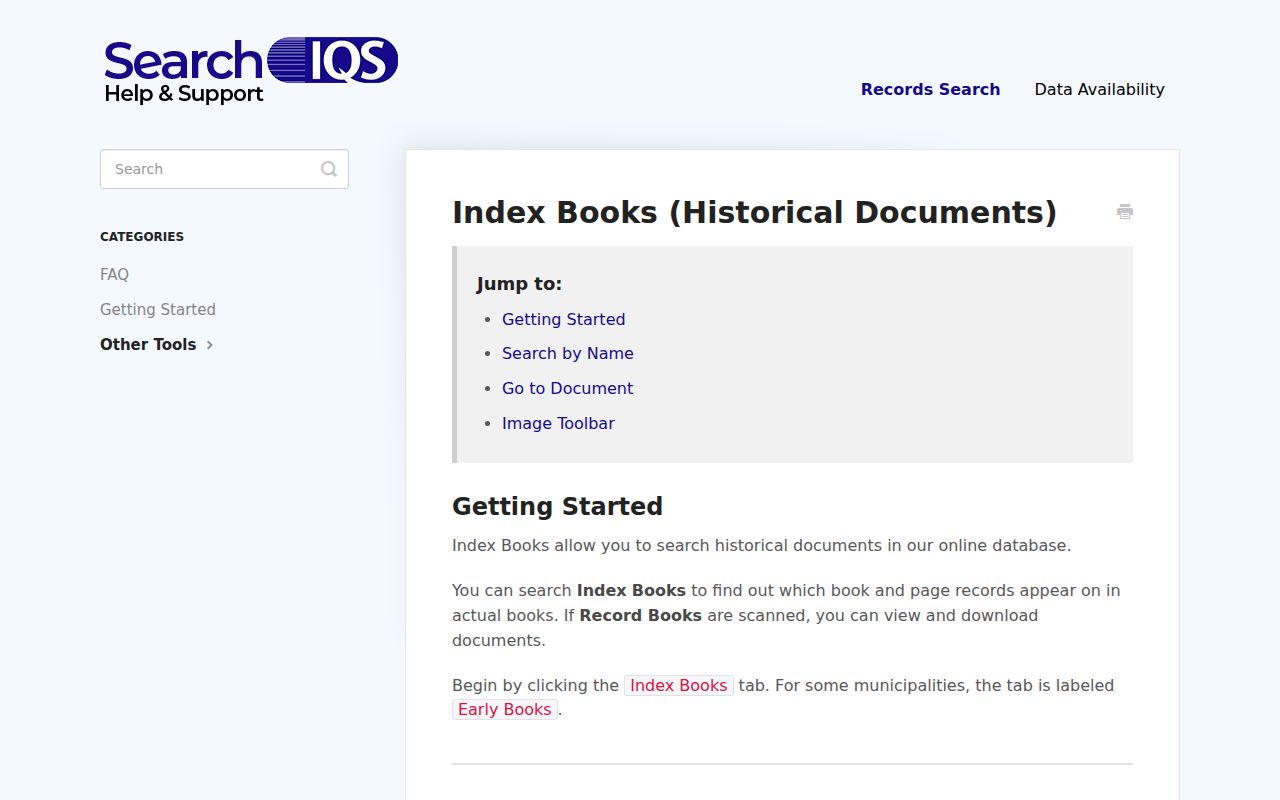
The image shows the jump from a modern owner-of-record result back into the older deed books behind it. That handoff is the heart of any backward parcel chain in Chemung County property records.